

The Silent Water Bill
How regional water scarcity is making food, energy, AI, and industrial growth more expensive and where investors will see the consequences

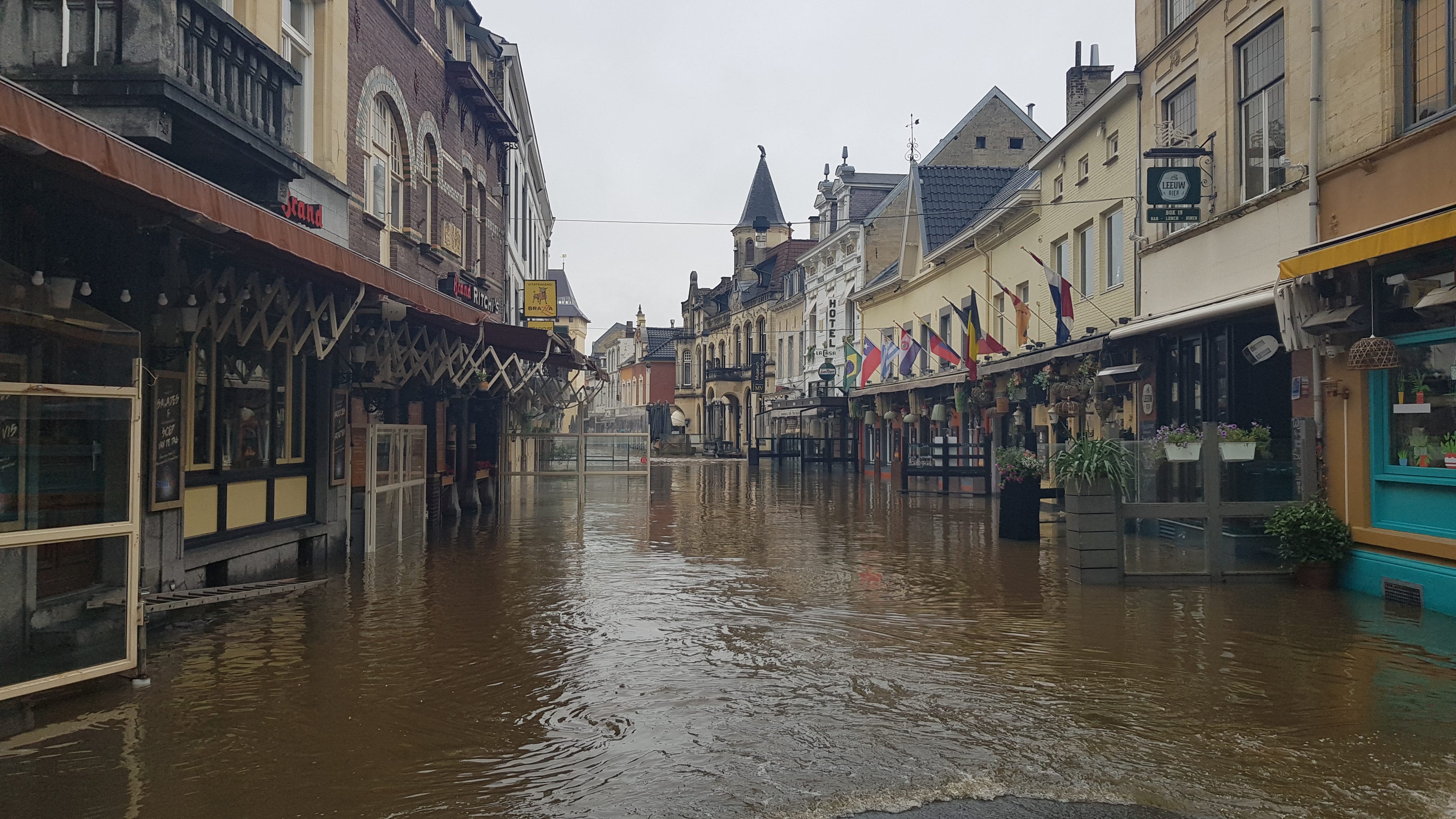
Severe floods shortly after prolonged droughts are hardly an unfamiliar sight. They are part of a world we have built over the past centuries, and only recently have we started to understand what lies behind it.
In 2021, large parts of Western Europe flooded. The following year was defined by drought, low river levels and depleted groundwater reserves. Farmers were only allowed to irrigate their crops to a limited extent, harvests failed and water-intensive companies were no longer permitted to establish themselves in certain regions. If this becomes structural, a prosperous and crucial economy can suddenly begin to slow. That is unacceptable. Investment is therefore needed to build a new world in which water remains available, regardless of when it falls or in what quantity.
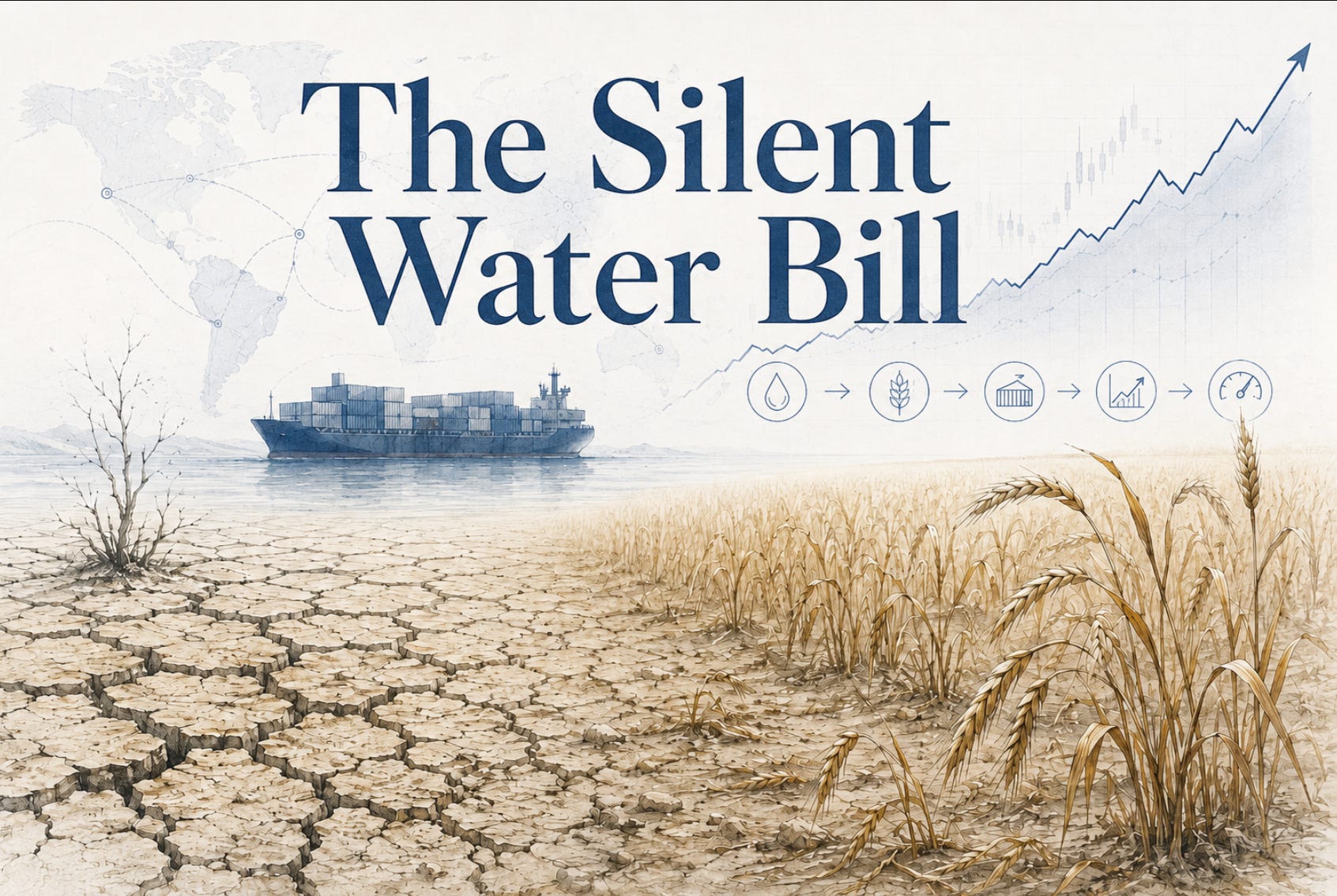
In this post, we will explore how a local water problem develops and how it can affect the global economy by exposing the underlying cause-and-effect cycle. We will then discuss why this matters to investors, to what extent it is financially relevant and which water markets are likely to require investment in the future.
Disclaimer
Do you appreciate our publication? Then you help us enormously with a like, comment, share and/or restack.
Chapter 1: When a Wet Country Has Too Little Water
Economic Water
Imagine a raindrop called Mike falling onto a German farm, on land repeatedly crossed by heavy machinery used to fertilise the crops. The top thirty centimetres of soil have been ploughed loose so the crops can grow, but underneath, the soil has been compressed by the enormous weight of the machinery until it is almost as hard as concrete. Mike is not absorbed into the ground and flows away from the landscape together with the other raindrops. Along the way, Mike carries pollution and soil towards a village covered in stone and pavement. Oops, a mud flood. Mike and all his colleagues then end up in the nearest stream. The stream once meandered through the landscape, but has since been straightened because that made it more efficient to build a village beside it. The stream eventually becomes a river, which has also been straightened. Because the entire system has become one long motorway, Mike is already rushing towards the sea at high speed, without ever getting the chance to enter the soil and eventually replenish the groundwater. Mike is lost. Mike can no longer serve the economy. Mike is even damaging the economy.
A prolonged drought with little rainfall afterwards is not necessarily a new phenomenon. Drought in the soil, however, partly is, because of the way we have reshaped the landscape. Soil drought can be seen as water stress. It measures the pressure on the system that must turn rainfall, rivers and groundwater into a reliable water supply that can serve the economy.
Different users within this economy use water in different ways. To make the effect of each user on water stress visible, we use two concepts: water withdrawal and water consumption.
Water withdrawal includes all water taken from a river, lake or the ground.
Water consumption covers the share that evaporates, is absorbed or otherwise does not return to its original source after use.
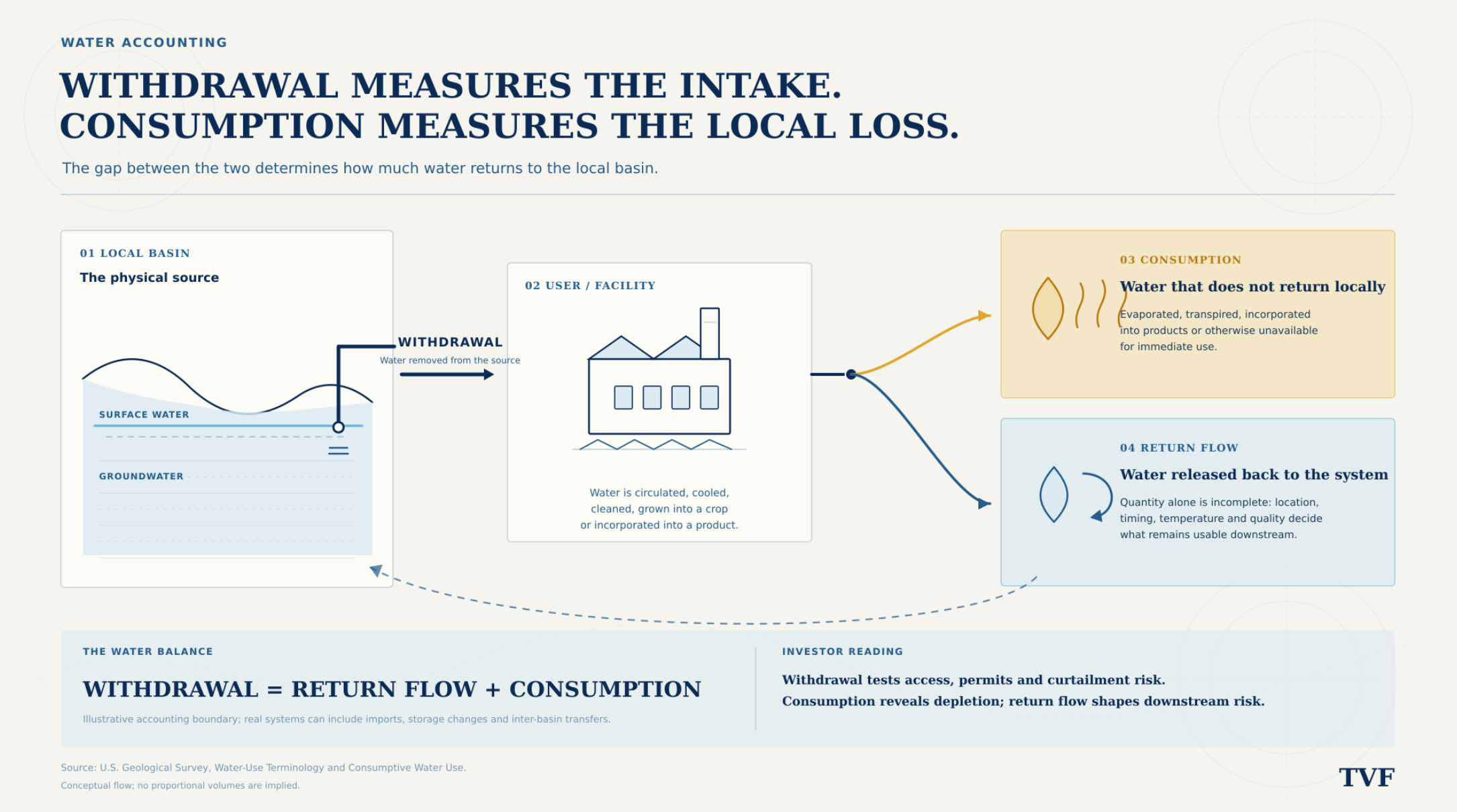
A power plant withdraws large amounts of water for cooling, but can also return most of it to the source. A crop or livestock supplied with water extracted from the ground withdraws less water than a power plant, but consumes much more of it in relative terms. Ultimately, a crop or a cow therefore has a much greater relative impact on water stress than a power plant. The economic pressure depends on how much water is consumed and what that consumption produces economically. A litre of water used by ASML generates substantially more economic value than a litre of water used for livestock.
You may wonder why river water or seawater is not simply used for our consumption. Water volume, however, is not the problem here. Two-thirds of the Earth is covered by water. We cannot use most of it because of its quality. Seawater requires expensive treatment to remove the salt, and this treatment does not take place at the volumes required to keep our economy running. Groundwater is already of sufficiently high quality to be used economically almost immediately, which is why the economic litre of water very often comes from groundwater. The consequence is a sharp decline in groundwater levels around the world.
Global rainfall totals conceal this story. Everyone thinks: “But surely we receive enough rain?” That is true. But we do almost nothing with this rain and effectively throw it away, or in this case, send it out to sea.
European Averages Conceal Water Stress
According to the European Environment Agency, 28% of EU territory and 32% of the population experienced water scarcity during at least one quarter of 2023. This happened despite declining water withdrawals and a relatively wet final year.
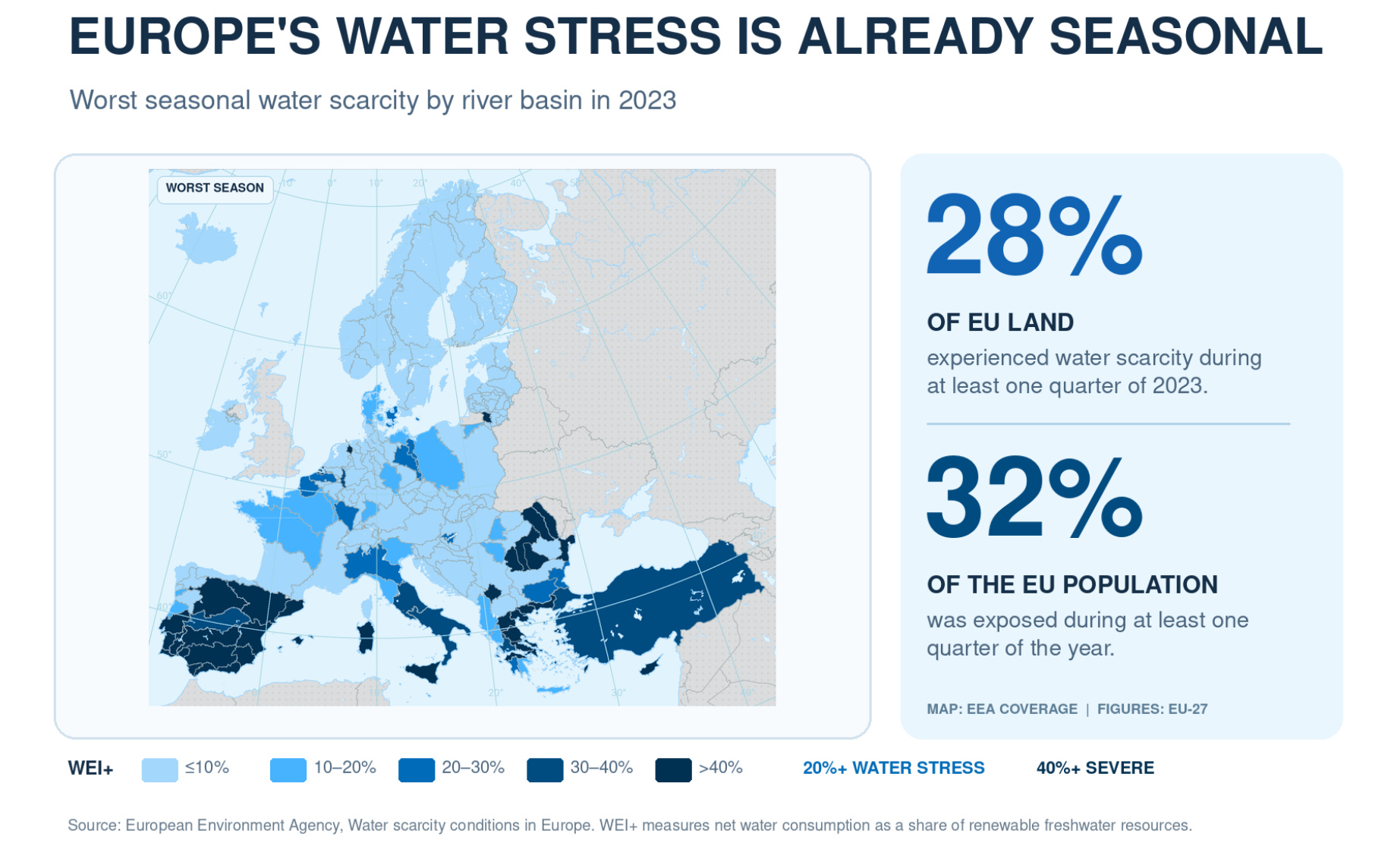
The EEA measures this pressure through the Water Exploitation Index Plus. This indicator compares net water consumption with renewable water supply within each river basin and quarter. A reading above 20% indicates water stress; above 40%, the pressure becomes severe and water use may become unsustainable. Europe is slowly moving towards severe water stress, with all the economic consequences that come with it.
Today, Southern Europe carries most of the burden because of dry summers and agricultural irrigation. But wetter regions such as Belgium, Denmark, France, Germany and the Netherlands also crossed the 20% threshold and experience water stress.
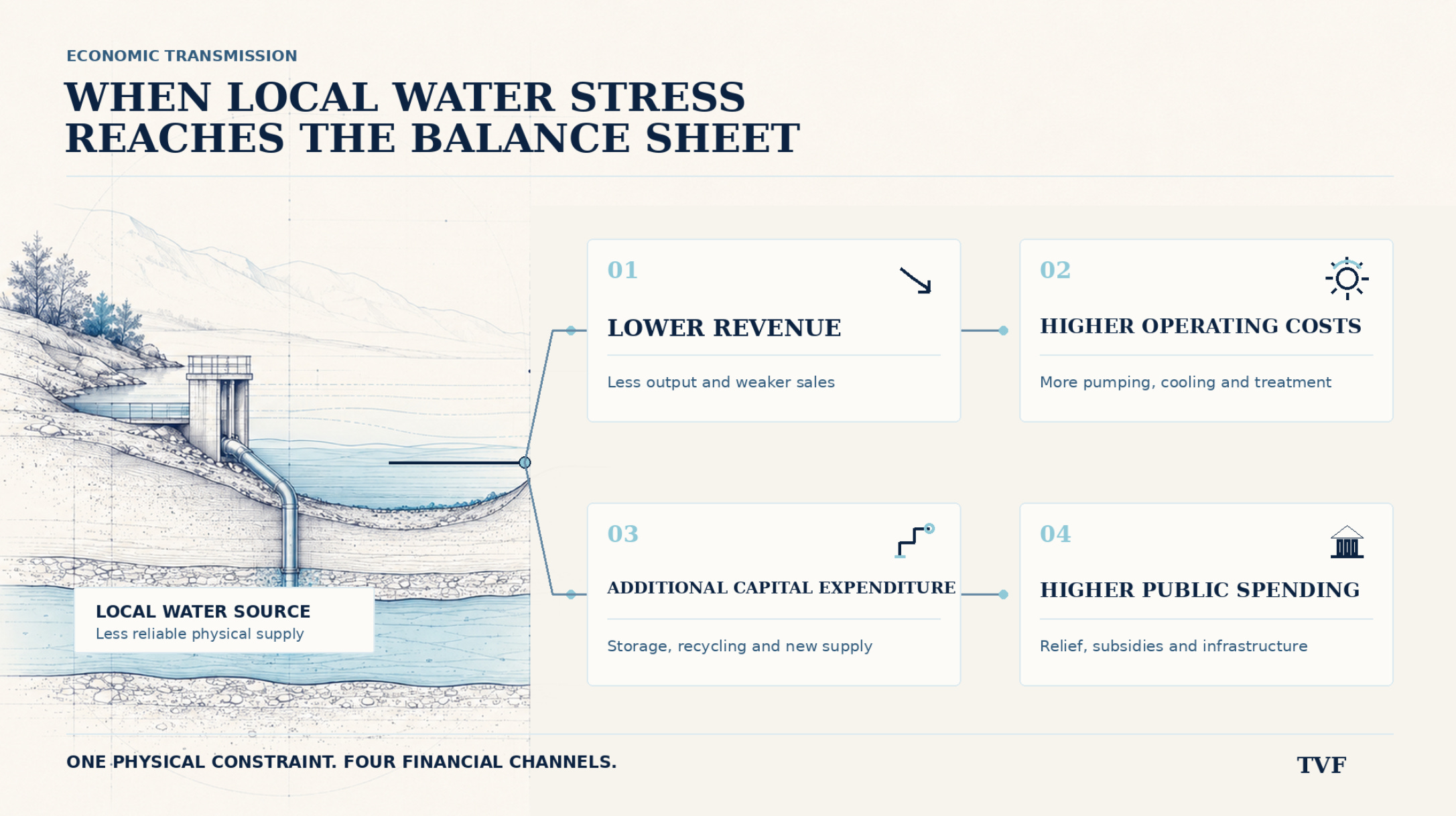
For a factory located in a vulnerable area, the financial consequences can include higher treatment costs, stricter permits and an inability to expand. That can be disastrous for the growth of a company, but also for the economy of a country if it starts falling behind because there is no room for economic expansion.
A System Built to Drain Water Must Now Retain It
The Netherlands is known as a master of water management, creating new land in the sea, holding back high water with dikes and building canals and pumping stations. Economically, the Netherlands has benefited enormously from this. But that success now threatens to contribute to its economic decline. The Netherlands has therefore developed a climate adaptation strategy that gives priority to retaining and storing water instead of sending it to the sea as quickly as possible.
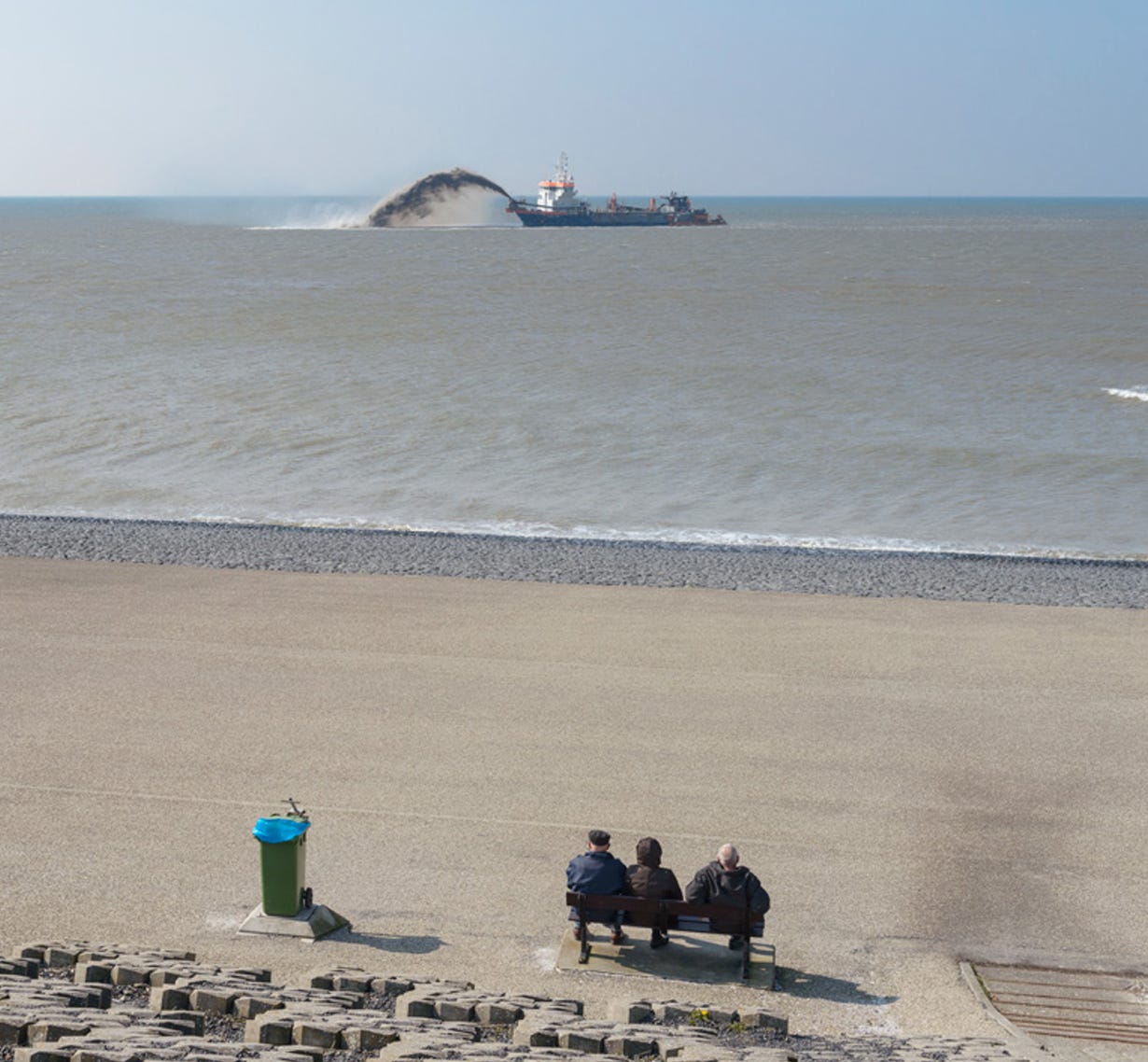
The floods of 2021 and the drought of 2022 exposed two extremes of the same problem. Exceptional rainfall caused the flooding. Land use, soil conditions, storage capacity and river design determined how quickly that water moved through the system. One year later, low groundwater levels and river levels showed how little protection a previous period of excess water provides when storage and timing do not match demand.
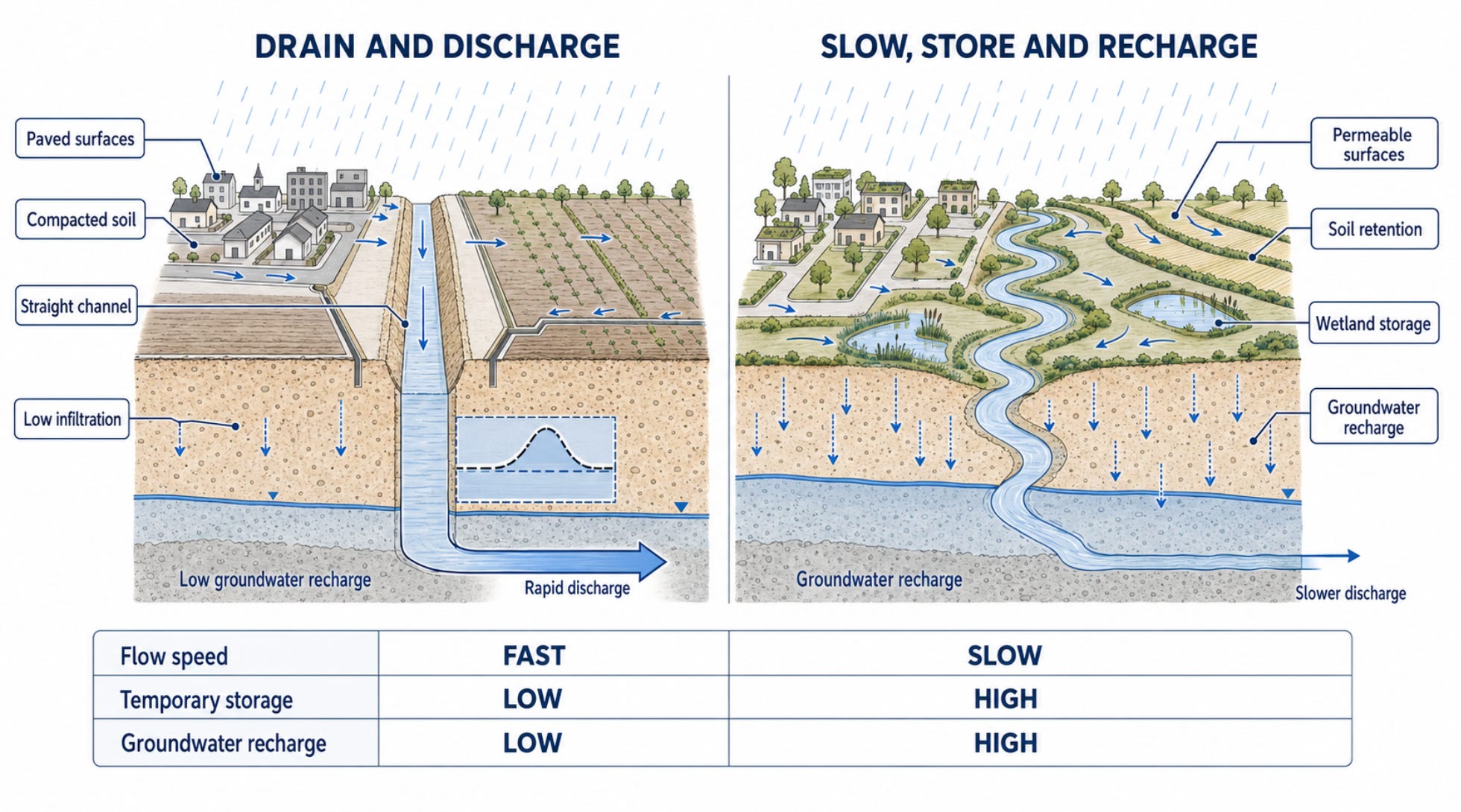
Flood protection and drought resilience therefore depend on the same underlying capacity: absorbing water when it arrives, retaining enough of it and making it available when households, agriculture and industry need it. A system optimised for average historical conditions comes under pressure when rainfall becomes more concentrated and dry periods last longer.
Groundwater Carries the Deficit
Weak price signals allow the pressure to accumulate. Drinking water must remain affordable, agricultural charges are politically sensitive and groundwater is often extracted through permits or historical rights. The price paid by the user rarely reflects the cost of developing a replacement source, restoring an aquifer or catching up on deferred infrastructure maintenance.
Groundwater therefore becomes a hidden balance-sheet item. When withdrawals exceed recharge, current production is partly financed by depleting a natural asset. Pumps continue to run, harvests continue and industrial output remains stable. The deficit only becomes visible later through deeper wells, higher energy consumption, deteriorating water quality, saltwater intrusion or government restrictions.
The comparison with a company is useful. A business can support short-term cash flow by postponing maintenance. The numbers continue to look healthy until breakdowns increase and a large catch-up investment becomes unavoidable. Water systems can maintain that illusion for decades because aquifers, soils and ageing networks absorb the imbalance before it appears in financial statements.
The Global Commission on the Economics of Water estimates that almost three billion people and more than half of global food production are located in areas where total water storage is expected to decline. The economic damage will be distributed unevenly. Regions with sufficient funding, strong infrastructure and strict allocation rules can adapt. Elsewhere, the deficit will first appear through lower harvests, constrained industrial growth and rising public expenditure.
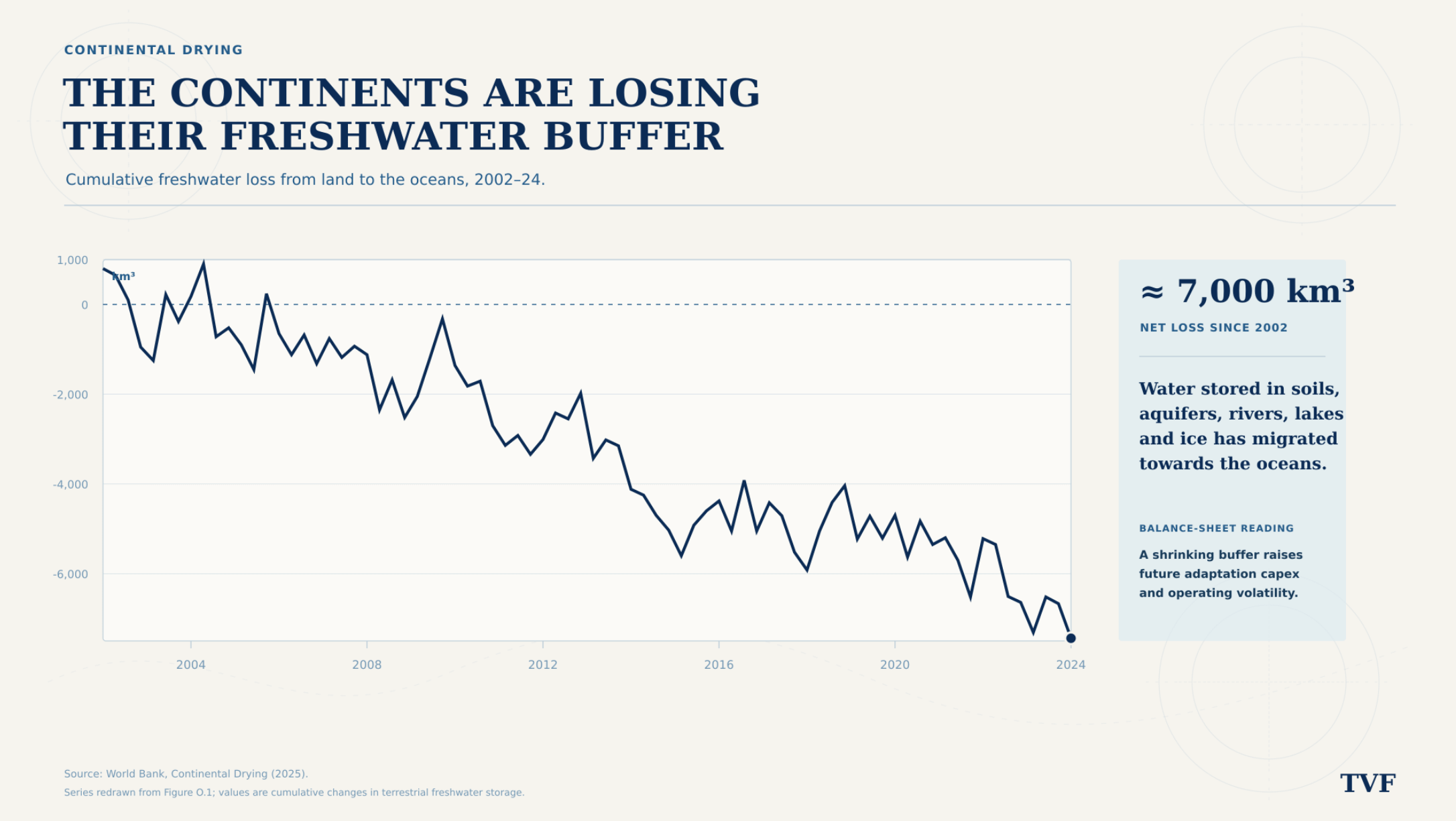
Water scarcity becomes economically material long before household taps stop running. The first price signals appear elsewhere: in electricity bills, treatment costs, capital expenditure, production restrictions and food prices. Agriculture provides the first broad transmission route.
Chapter 2: Food Is the First Channel of Economic Transmission
A harvest runs on a calendar
A field can receive normal rainfall over an entire year and still produce a poor harvest. Timing decides how much of that water becomes food. A shortage during flowering, pollination, or grain formation can destroy yield potential within weeks. Rain arriving after that window may refill rivers and reservoirs, but it cannot repair the crop. Excess water creates its own problems when saturated fields delay planting, damage roots, or wash nutrients from the soil.
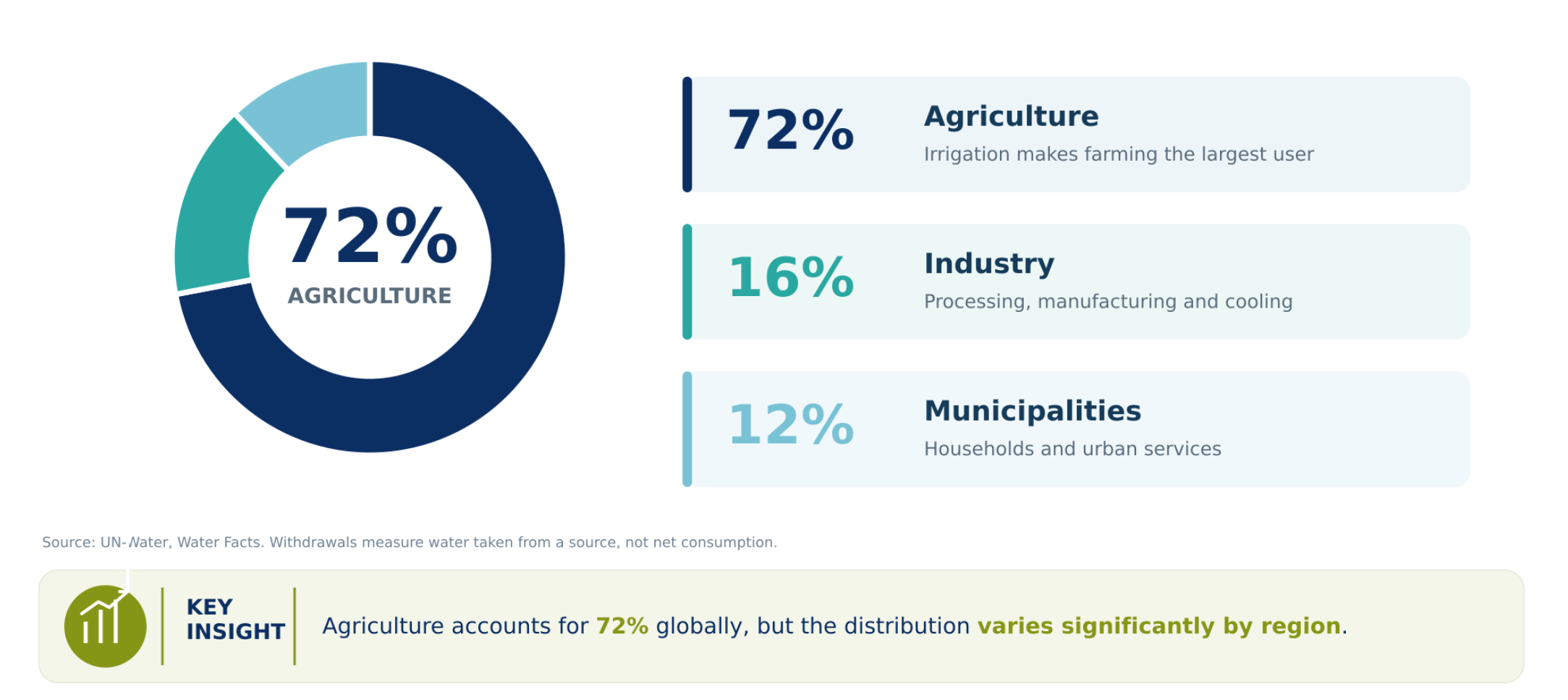
Agriculture’s dependence on this narrow biological calendar explains its central role in the water economy. UN-Water estimates that farming accounts for 72% of global freshwater withdrawals, compared with 16% for industry and 12% for municipalities. The regional mix varies, yet the global imbalance is decisive: pressure on water supply reaches the food system before it becomes visible across most other sectors.
Irrigation gives farmers greater control over timing by replacing unreliable rainfall with water from rivers, reservoirs, and aquifers. It can stabilise harvests for decades, provided those sources recharge fast enough. Where pumping persistently exceeds recharge, stable production begins to depend on a shrinking underground reserve.
The deterioration is gradual. Wells deepen, pumps consume more electricity, and water quality weakens. Saltwater intrusion can contaminate coastal aquifers, while poor drainage leaves salts behind in the soil. At that point, the damage reaches beyond one failed season. The land itself becomes less productive and requires more water, energy, and capital to generate the same output.
A local drought needs a global choke point
Most crop failures remain regional events. Their global impact depends on the affected crop, the region’s share of export supply, available inventories, substitutes, and the policy response. A poor harvest in a small producing region can devastate local incomes while barely moving international prices. The same weather shock inside a major export basin can tighten supply across continents.
Northern India shows how severe water pressure can remain primarily a domestic problem. Punjab and Haryana sit at the centre of the country’s rice–wheat system. In 2025, the FAO warned that groundwater depletion, soil degradation, and climate vulnerability were threatening its long-term productivity. The immediate bill falls on Indian farmers, electricity subsidies for pumping, domestic food security, and the government’s freedom to export grain.
Brazil has a faster route into world markets. The country is rich in water overall, while several major agricultural regions still depend heavily on rainfall arriving inside a narrow growing window. During the 2020/21 season, historic drought and frost reduced Brazil’s second corn crop to an estimated 59 million tonnes, far below the 75–80 million tonnes initially expected. A regional weather failure became internationally relevant because it struck one of the world’s major agricultural exporters.
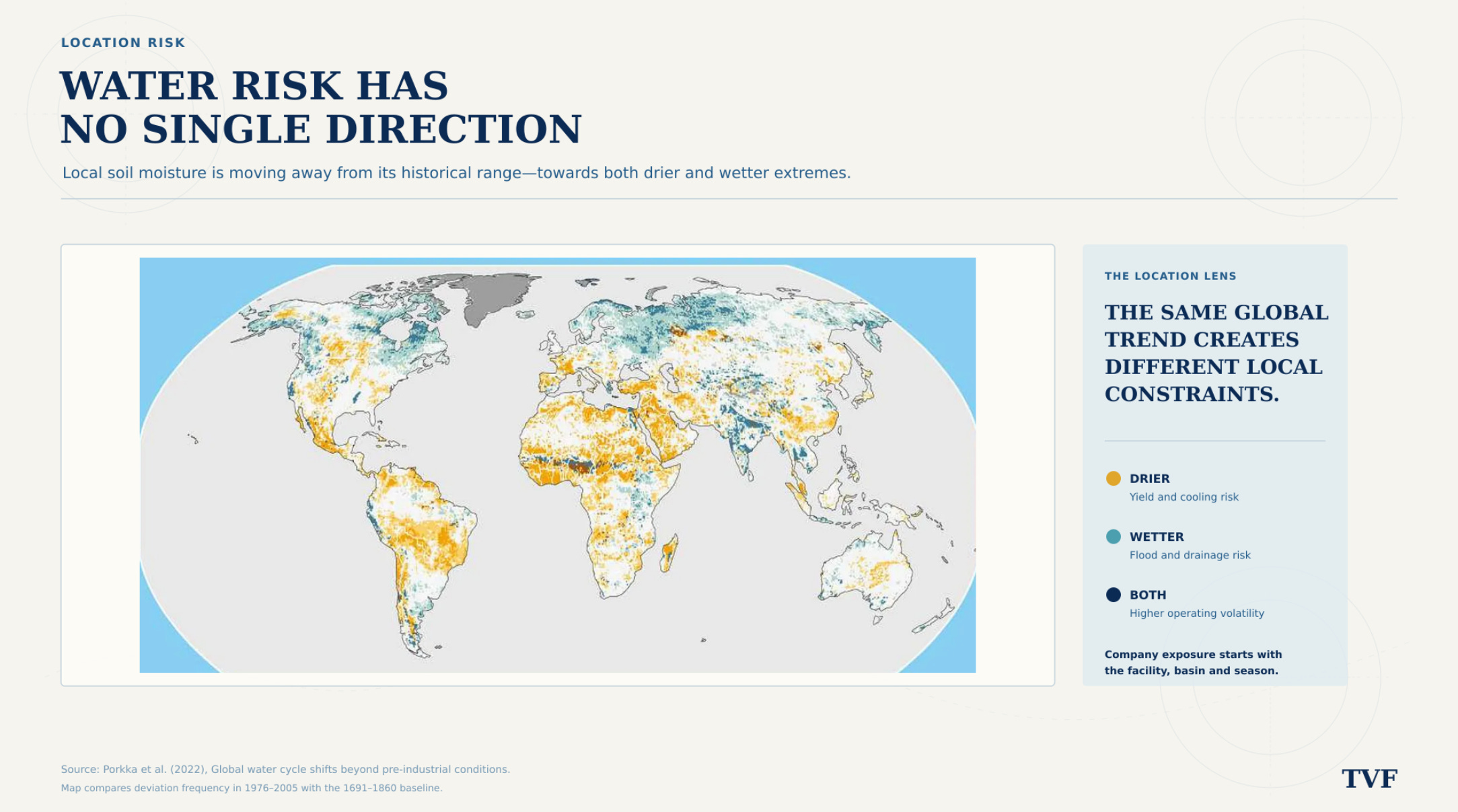
Global food shocks become more dangerous when several breadbaskets disappoint together. Importers compete for a smaller pool of available supply, inventories decline, and the marginal tonne becomes much more expensive. Export restrictions can then accelerate the move. Governments seeking to protect domestic consumers remove additional supply from international markets precisely when import-dependent countries need it most.
Trade normally acts as the pressure valve. Countries with limited water can import crops and effectively import the water used to grow them. This virtual water allows food production to concentrate in regions with more favourable conditions. It also replaces physical water risk with dependence on shipping routes, foreign currency, and cooperative exporters. Wealthy importers can usually secure supply at a higher price. Countries with weak currencies or limited reserves may simply lose access.
The bill spreads beyond the farm
Lower yields first raise the cost of grain, vegetables, and vegetable oils. Animal feed carries the pressure into meat and dairy, while ingredients transmit it into processed food. Producers and retailers then divide the shock between consumers and their own margins. Strong brands and scarce products support price increases. Competitive categories leave more of the cost inside the supply chain.
Governments absorb another share. They compensate farmers, subsidise irrigation and electricity, release reserves, lower food taxes, or finance emergency imports. Agricultural tax and export revenues may fall at the same time. Wealthier states can spread the cost across public budgets and insurance systems. Financially weaker countries face a harsher combination of import demand, currency pressure, rising subsidies, and political instability.
Food inflation is especially regressive because lower-income households spend more of their income on basic necessities. Central banks inherit a problem they cannot physically solve. Higher interest rates cannot produce wheat or replenish an aquifer. They can only contain the secondary effects on wages, inflation expectations, and the currency.
A severe water shock can therefore create a distinctly stagflationary mix: weaker agricultural output, higher consumer prices, deteriorating public finances, and restrictive monetary policy. By the time it appears in headline inflation, the first losses have already surfaced in farm income, pumping costs, insurance claims, corporate margins, and government support programmes.
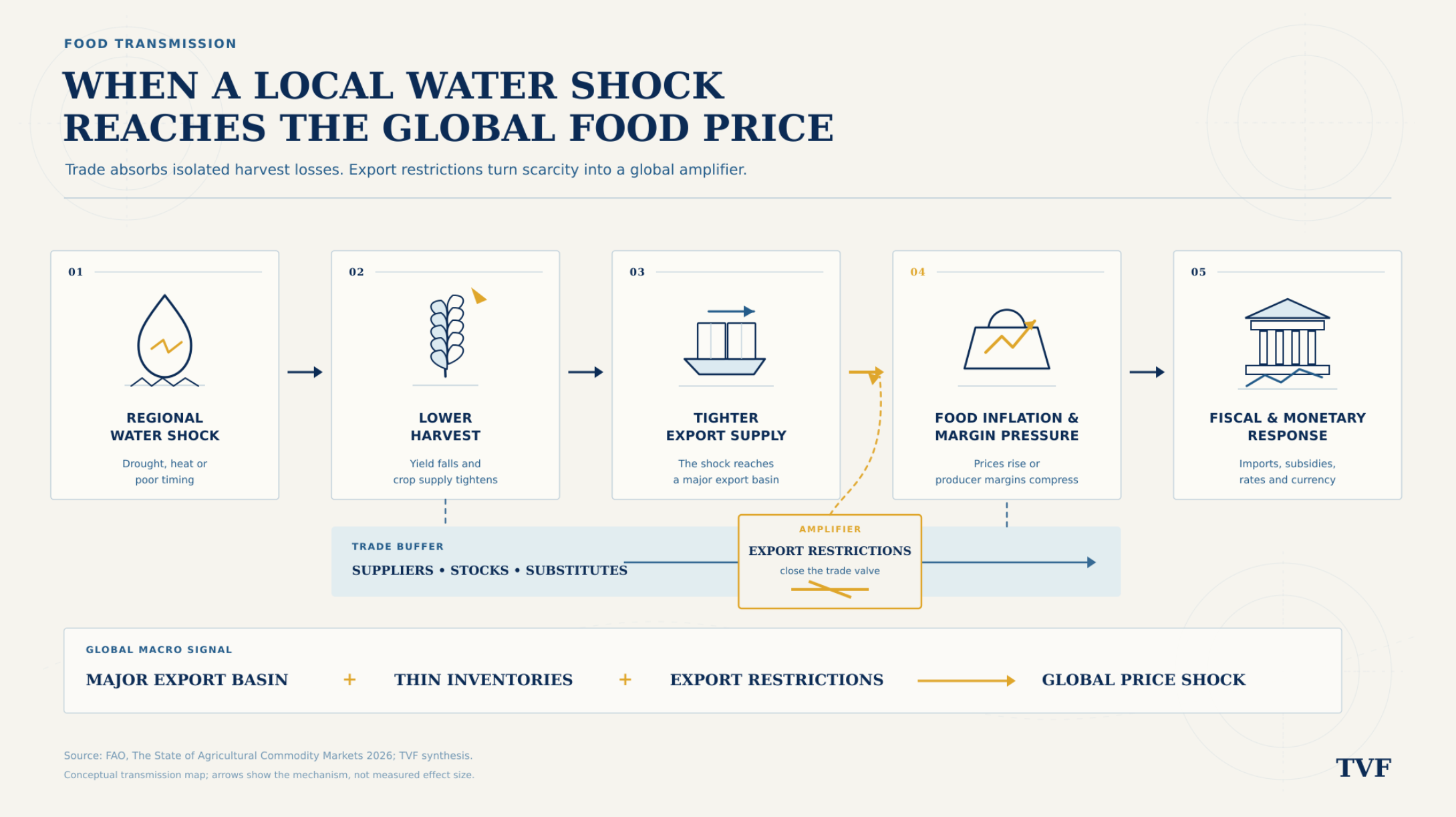
The relevant macro signal is highly specific. Water conditions become globally important when they deteriorate inside a difficult-to-replace export region while inventories are thin and governments are willing to restrict trade. Food is the route through which local hydrology crosses borders. Industry concentrates the same risk inside individual factories, power plants, and transport corridors.
Chapter 3: When Water Becomes an Industrial Constraint
When the Rhine falls, factories slow
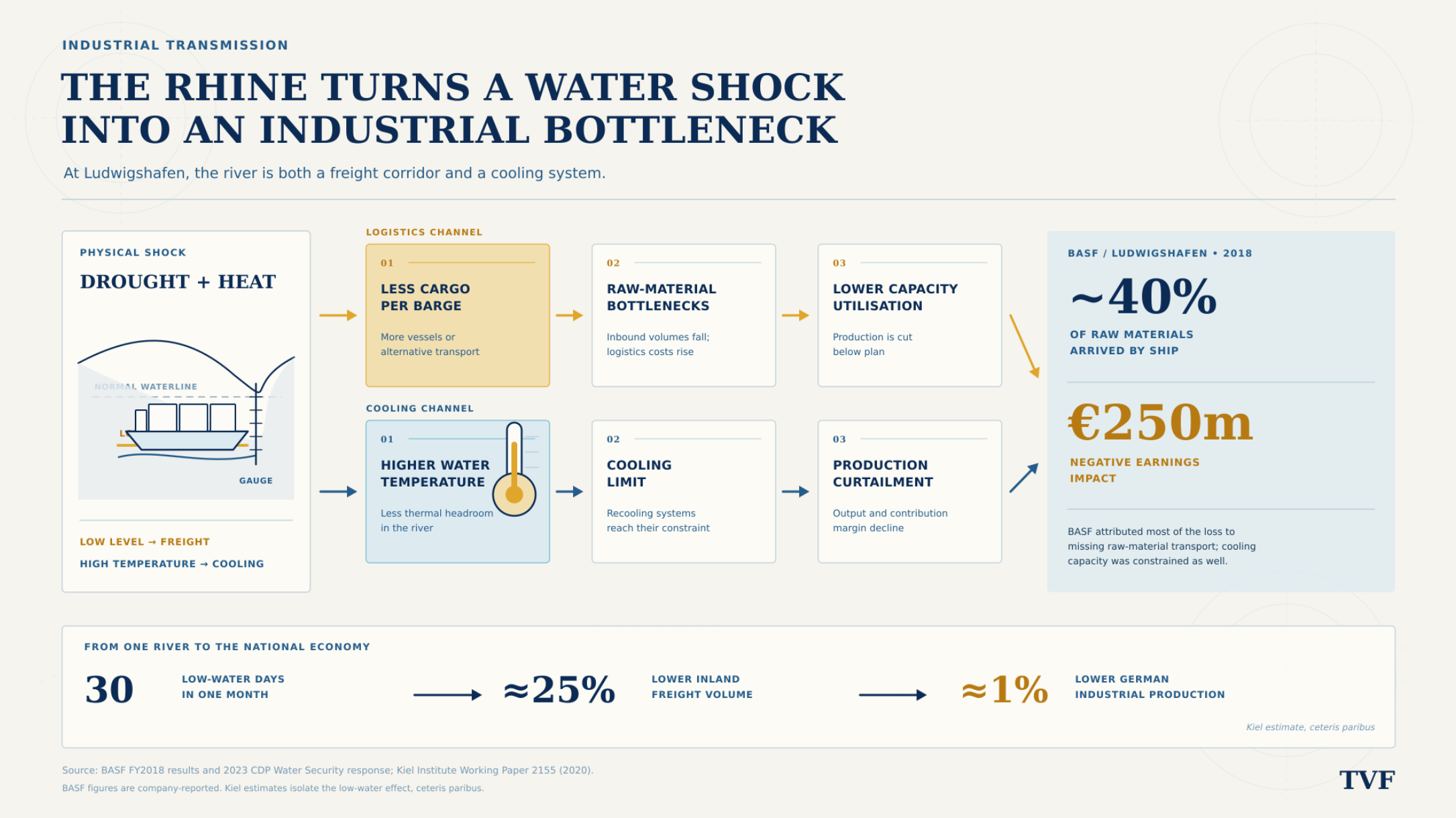
Water risk can sound abstract until a river becomes too shallow for a barge. In 2018, that happened on the Rhine. As water levels fell, inland vessels had to sail with lighter loads. For BASF’s enormous production complex in Ludwigshafen, the consequences reached far beyond transport.
At Ludwigshafen, the Rhine is part of the factory. It brings in raw materials and provides cooling water. In 2018, low water restricted the first function, while high temperatures put pressure on the second. BASF had to rework its logistics and reduce production.
The financial result was not difficult to see. In its 2018 annual report, BASF said the forced reduction in capacity utilisation lowered earnings by approximately €250 million. Afterwards, the company invested in vessels that could carry more cargo at lower water levels and developed alternative logistics.
This is what climate and water risk look like once they reach a valuation model. They do not arrive as an abstract sustainability score. They show up as fewer units sold, higher transport costs and additional capital expenditure.
And the effect did not stop at BASF’s gates. Research by the Kiel Institute covering 1991-2019 estimates that a month with 30 days of low water reduces German industrial production by approximately 1%, all else being equal. The Rhine is therefore more than a waterway. It is infrastructure that determines how much of Germany’s existing industrial and transport capacity can actually be used.
Energy needs water. Water needs energy.
The dependence runs both ways. According to the International Energy Agency, the energy sector accounts for around 10% of global freshwater withdrawals. Water is needed for fuel extraction, bioenergy and electricity generation, especially to cool thermal power plants. The water sector, in turn, needs energy to pump, transport, treat and desalinate water.
Heatwaves bring both sides of that relationship under pressure at the same time. Demand for air conditioning rises just as rivers may be running lower and warmer. Thermal power plants cannot discharge unlimited amounts of heated cooling water back into those rivers without damaging ecosystems. A plant can be technically capable of running, with customers asking for more electricity, and still have less room to operate precisely when the grid needs it most.
For hydropower, the problem is even more direct: when river flows and reservoir levels fall, part of the energy source itself disappears. EDF reported that exceptionally poor hydrological conditions in 2022 reduced its French hydropower output by 9.4 TWh compared with the previous year.
Wind and solar use relatively little water while operating, so they can reduce the average water dependence of electricity generation. But the energy transition does not make water disappear from the equation. It moves part of the demand upstream, into the mining and processing of copper, lithium and other materials.
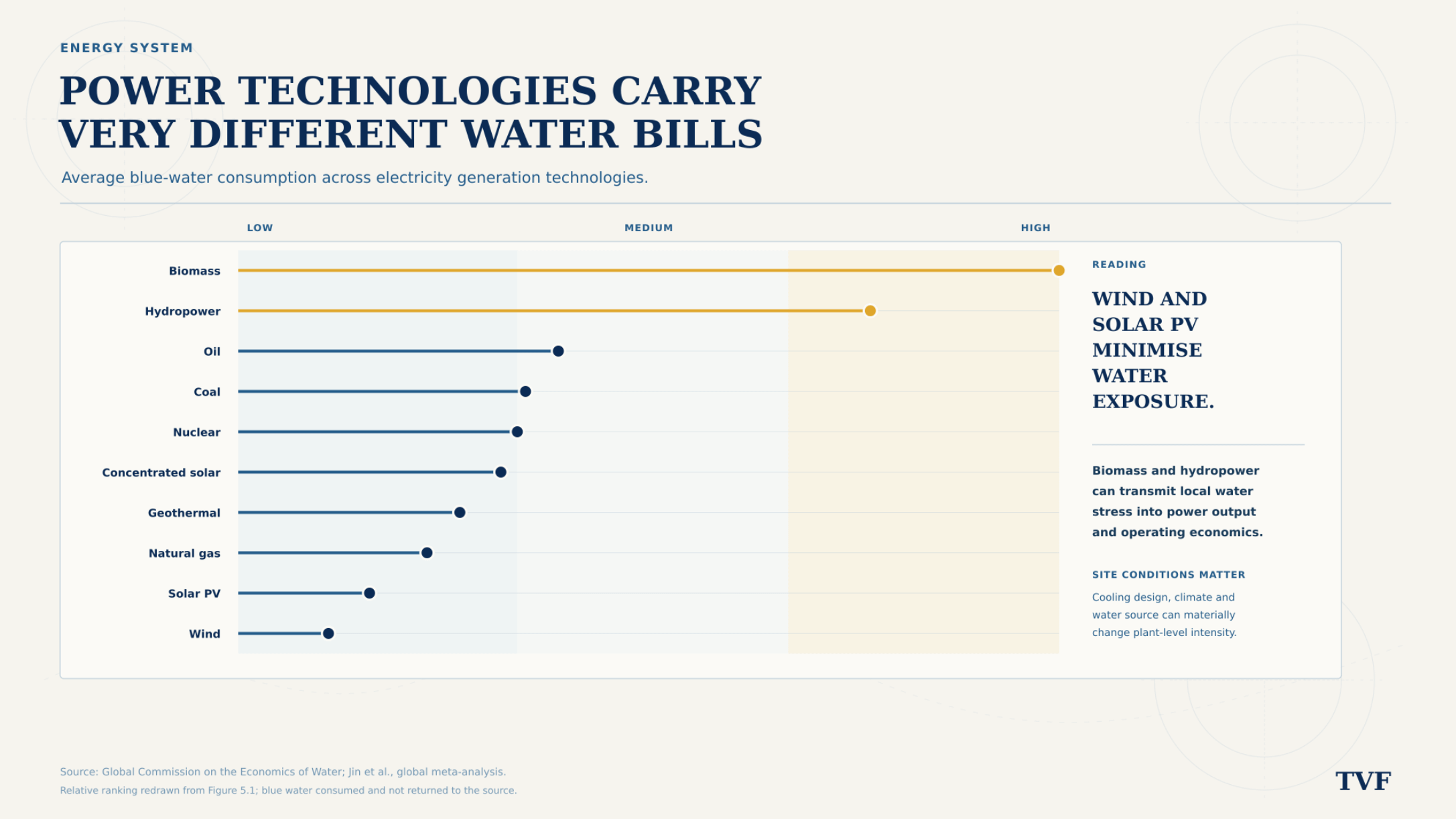
That is why location matters as much as technology. A mine in a water-abundant region has a very different risk profile from an otherwise similar operation in a dry river basin, where farms and cities depend on the same source.
AI runs on more than electricity
AI is usually described as a story about software, chips and electricity. Water is the missing line item. As AI grows, the physical foundations of the digital economy are becoming harder to ignore.
The IEA’s 2026 update expects global electricity consumption by data centres to rise from approximately 485 TWh in 2025 to around 950 TWh in 2030. That would be roughly 3% of global electricity demand. The share may sound manageable, but the demand will not be spread evenly across the world. It will be concentrated in a limited number of regions, power grids and municipalities.
Data centres have two water bills. The first is paid on site, where water may be used for cooling. The second sits inside the electricity they buy, because power generation consumes water. There is no general rule that data centres mainly use groundwater. Depending on the location, the source may be a municipal drinking-water network, surface water, groundwater or recycled wastewater.
The economically relevant question is more local: does the data centre need the same water, at the same time, as households, farmers and other industries?
Lawrence Berkeley National Laboratory’s 2024 United States Data Center Energy Usage Report estimated that US data centres directly consumed approximately 66 billion litres of water in 2023. Their indirect consumption through electricity generation was far larger, at nearly 800 billion litres.
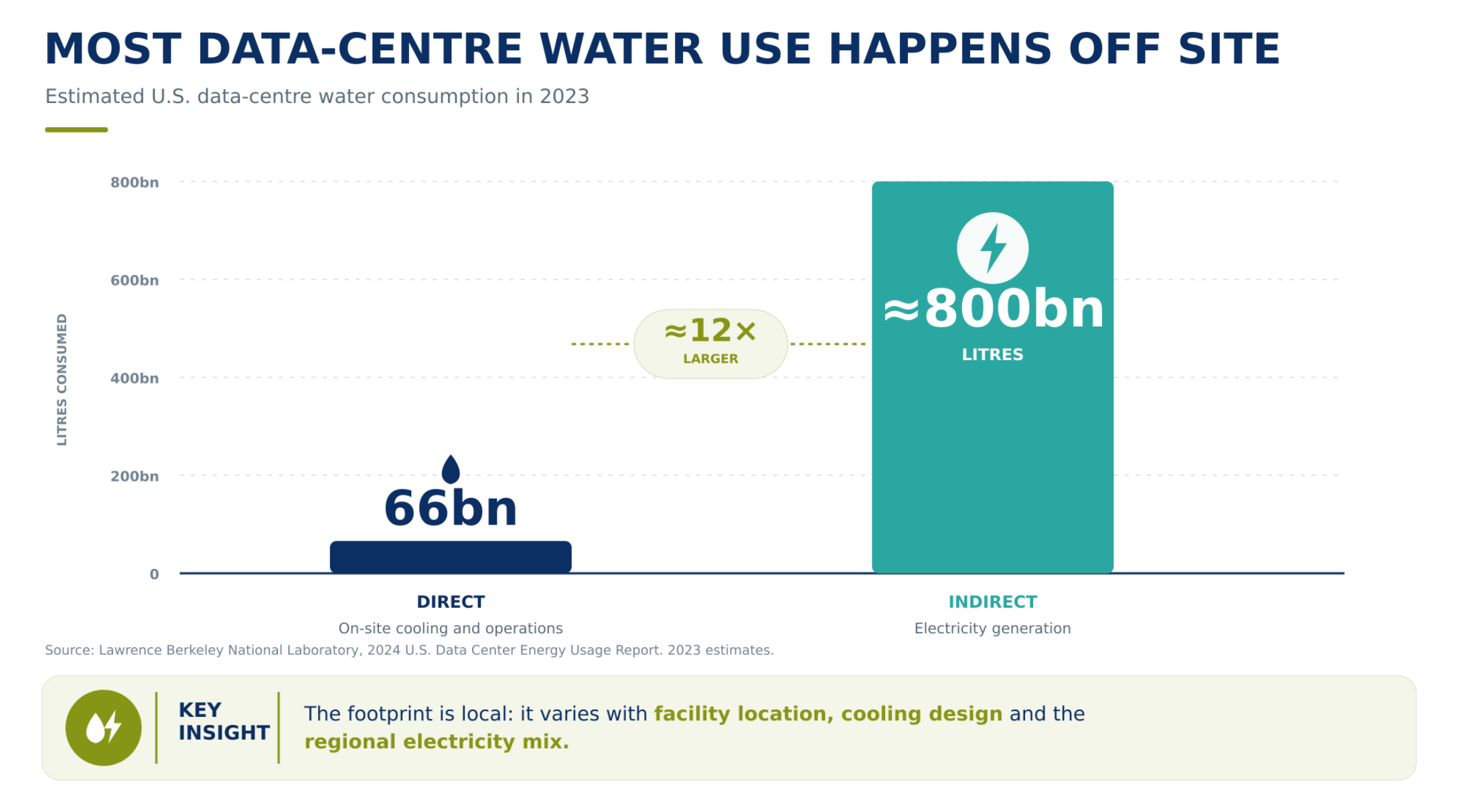
Those national totals show the scale, but not the pressure point. Sixty-six billion litres spread across large, well-managed river basins may be less problematic than a much smaller volume drawn from a dry municipality with limited infrastructure. Water risk lives at the level of the basin, the grid and the permit.
Cooling technology creates another trade-off. A system that saves water may use more electricity, while efficient evaporative cooling may consume more water locally. The point is that growth may require extra capital for alternative cooling, recycling or a different site. Where residents or farmers already face restrictions, public opposition can also slow the permitting process.
Chipmaking needs water that is almost impossibly clean
Semiconductor plants reveal another side of the problem. For a chip fab, the amount of water matters, but ordinary water is not good enough. During production, wafers are cleaned again and again with ultrapure water from which virtually all minerals, organic compounds and particles have been removed.
A fab therefore needs more than access to a reservoir or a municipal network. It needs treatment facilities that can deliver water of an extremely stable quality, without interruption.
Taiwan’s 2021 drought - its worst in decades - became a real-world stress test. TSMC avoided major production disruptions. The company had to arrange alternative sources and transport water. It later expanded recycling and the use of treated wastewater. In 2024, it also launched a project for its own reclaimed-water facility at its Arizona plant.
These are not discretionary sustainability projects. They buy business continuity and make future capacity growth possible.
This also changes how to think about the global subsidy race for semiconductor plants. Tax incentives, talent and electricity all matter. So do reliable water supplies, treatment facilities and wastewater capacity. A subsidy can make a location look financially attractive. It cannot create a viable local water balance.
The same logic applies, in different degrees, to chemicals, food, beverages, mining and battery materials. A site with low wages or generous subsidies may look inexpensive in a spreadsheet. It becomes less attractive if the project also needs new pipelines, storage and treatment systems, or if production could later be restricted.
That is how water stress eventually reaches value: through longer construction timelines, higher capital expenditure, lower output and a greater risk that permits will be tightened after the investment has been made.
Chapter 4: The Bill Reaches Growth, Balance Sheets, and Budgets
The same drought does not carry the same economic cost everywhere
The economic damage caused by water stress is determined by the combination of geography and adaptive capacity. Southern Europe faces a structural overlap between dry summers, irrigated agriculture, tourism, and high urban demand. Northwestern India combines major agricultural production with depleted groundwater and cheap electricity for pumping. In the Middle East and North Africa, natural scarcity is already embedded in the economic model. The southwestern United States and parts of northern Mexico combine rapid urban and industrial growth with limited local water sources.
Yet severe water stress does not automatically result in severe economic damage. Wealthy Gulf states can build desalination plants, import food, and finance expensive infrastructure. A poor country in the same climate may technically have the same options, but lack the energy, creditworthiness, or foreign currency required to deploy them at scale. Institutions also determine who receives priority during dry periods and whether permits and withdrawal restrictions are actually enforced.
This is why a global water statistic must always be translated into the context of a local economy. What share of employment and exports depends on water? Can food be imported? Is there redundancy in energy and logistics? Can the government afford emergency support? Is there a credible system of water rights? A water-scarce economy can be resilient, while a relatively wet region can become vulnerable when a single factory, river, or aquifer is critical to a large share of local value creation.
From production stoppage to lower growth
A water-related shock usually begins within a particular sector. A farmer harvests less, a power plant generates less electricity, or a factory cuts production. The damage then spreads. Suppliers lose revenue, employees work fewer hours, and customers turn to more expensive alternatives. Banks see credit risks rise and insurers must reprice recurring losses. Governments collect less tax revenue just as support and recovery spending increase.
In 2024, the Global Commission on the Economics of Water published a modelling analysis suggesting that the combination of changing precipitation, rising temperatures, and declining total water storage could push median economic output in high-income countries approximately 8% below the baseline by 2050. For low-income countries, the estimated loss rises to between 10% and 15%. These are scenario outcomes, not precise forecasts. Their main relevance is that they show how water can affect the entire economy
The damage also accumulates in years without an acute crisis. A company uncertain about its future water rights may postpone an expansion or choose another location. A farmer invests less in land that is losing value through salinisation. A municipality sets aside funding for emergency measures and climate adaptation that can no longer be spent on education, housing, or public transport. Water can therefore reduce potential growth long before the taps actually run dry.
The state is often the insurer of last resort
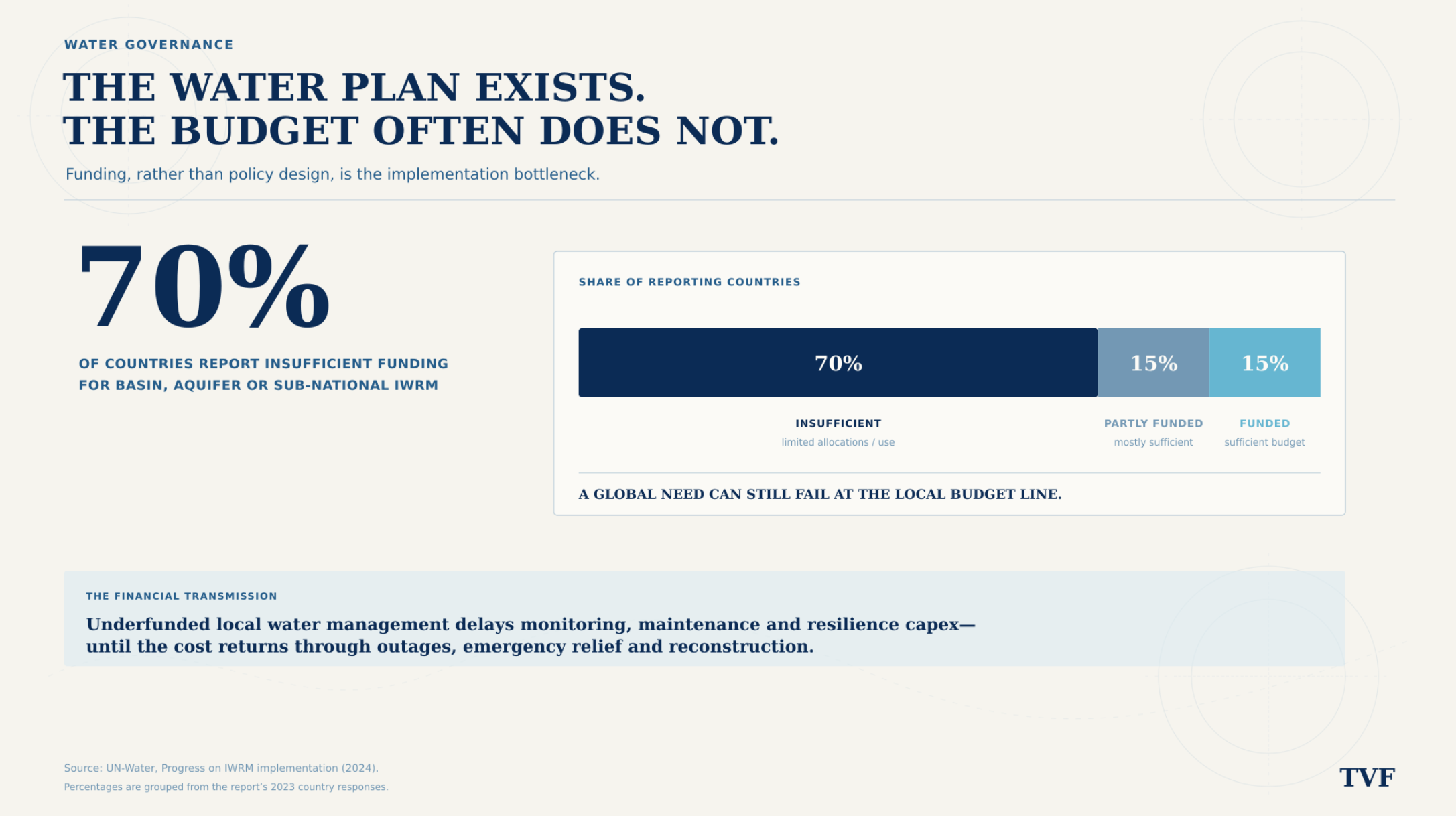
Many adaptation measures have the characteristics of public infrastructure. Pipelines, reservoirs, dikes, sewerage systems, and wastewater treatment deliver broad social benefits, but the returns cannot always be captured easily by a single private party. When investment has been insufficient for years, the catch-up bill usually falls to municipal and national governments.
This makes water a fiscal issue. Spending must compete with defence, ageing populations, power grids, housing, and industrial policy. Wealthy countries can cushion damage for longer through subsidies, insurance, and new infrastructure. This does not eliminate the risk; it shifts it to taxes, premiums, regulated tariffs, and public debt. Poorer countries lack this shock-absorbing layer, meaning lower harvests and inadequate services translate more quickly into pressure on purchasing power, health, and political stability.
For investors, the key problem is that water dependence is rarely visible in consolidated financial statements. A multinational may report a strong group margin while one irreplaceable plant is located in a vulnerable river basin. A decline in total water consumption says little if exposure at that critical location is increasing. Conversely, a large withdrawal in a water-abundant and well-managed region may be less risky than a small volume in a dry area.
A useful analysis must therefore consider location, source, quality, and season. Where is the critical production asset located? What water rights does the company hold? How much water is recycled? Does the facility compete with households or agriculture? What investments are required to support growth, and can the company pass those costs on? Only by answering these questions can a broad climate risk be translated into a financial scenario for volumes, margins, capital expenditure, and free cash flow.
Chapter 5: Where Scarcity Can Turn Into Cash Flow
A major societal need is not necessarily an attractive investment
The need for water investment is undeniable, but there is no single reliable figure for the global market. Older estimates compiled by the OECD range from $6.7 trillion through 2030 to $22.6 trillion through 2050. The underlying studies use different definitions and exclude, among other categories, irrigation and water for energy. These figures are therefore too often presented as if they were current revenue forecasts. They are not. A more specific approach is needed.
In 2024, the World Bank estimated that developing countries spend approximately $164.6 billion in public money on water each year. According to the report, an additional $131.4 billion to $140.8 billion annually is needed for safe drinking water and sanitation alone to achieve the relevant development goals. Notably, only 72% of available water budgets are spent on average. The problem is therefore not solely a shortage of capital. Project preparation, administrative capacity, tariff structures, and execution determine how much of the underlying need ultimately becomes revenue for companies.
Different business models
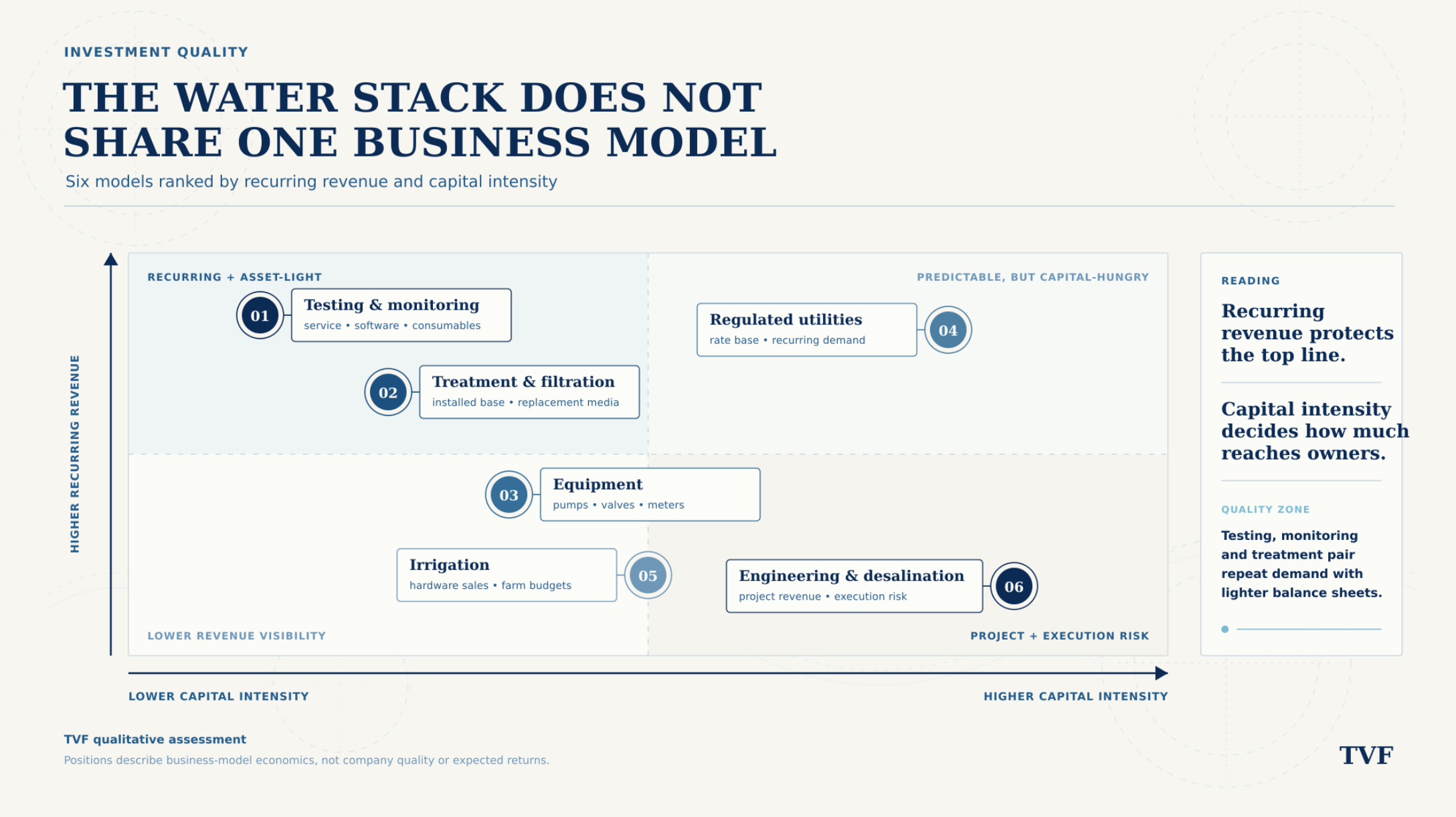
Regulated water utilities offer predictable demand and a visible investment base. Under favourable regimes, they are allowed to earn a set return on approved assets. The quality of the investment depends on the regulator, the condition of the network, financing costs, and the willingness to let tariffs rise alongside investment. Water scarcity is not the only source of growth. Even a wet region may require significant investment because of ageing pipelines, stricter quality standards, and population growth. Scarcity increases the urgency, but regulation determines whether that urgency generates shareholder returns.
Manufacturers of pumps, valves, piping systems, meters, and flow-control equipment sell to utilities, industrial companies, buildings, and agriculture. This broad customer base reduces dependence on a single water market, while maintenance and replacement create recurring demand. Differences in economic quality stem from technology, distribution, the installed base, and service. A generic pump sold in a competitive market has a very different margin profile from a critical system embedded deep within a customer’s production process.
Water treatment and filtration are often closer to mission-critical processes. A semiconductor plant, pharmaceutical company, or food manufacturer cannot simply compromise on water quality when minor contamination can render an entire production batch worthless. Suppliers of membranes, chemicals, filters, and maintenance services can therefore build attractive recurring revenue and switching costs. The strongest position arises when the solution accounts for only a small share of the customer’s total cost, but prevents a major production risk.
Testing, measurement, and monitoring form a less visible category. Scarcity and stricter standards increase the value of reliable data on leakage, quality, withdrawal, and discharge. Hardware may be cyclical, but consumables, calibration, software, and service contracts make the business model more stable. These companies can combine exposure to water investment with high recurring revenue, limited capital intensity, and a large installed base.
Agriculture offers the greatest absolute potential for water savings, but the commercial incentives are difficult. Drip irrigation, soil-moisture sensors, lighter machinery, ground cover, and improved crop management can enhance infiltration and increase yields per litre used. Efficiency, however, does not automatically reduce total withdrawals. If a farmer uses the water saved to irrigate additional hectares, pressure on the river basin remains unchanged. Technology therefore delivers structural savings only when water rights, pricing, and enforcement constrain volume growth.
Desalination can provide dry coastal regions with a controllable source of water, but it is not a universal solution. The technology requires energy, capital, and careful management of concentrated brine. The economics may work for urban drinking water and high-value industry, but generally not for vast agricultural volumes far inland. Commercial value is also divided among developers, engineering and construction companies, membrane suppliers, power producers, and financiers. Growth in the desalination market therefore says little about which part of the value chain will retain the highest returns.
Natural infrastructure also deserves attention, although it is more difficult to access through listed companies. Restoring wetlands, soils, and floodplains can retain water for longer, slow peak runoff, and reduce treatment costs. Regenerative agricultural practices can improve infiltration and moisture retention in suitable soils. The financial benefits often appear as avoided damage across multiple parties, which means government involvement or a public-private structure is usually required to fund the projects.
Where the strongest economics are likely to be found
The most attractive companies do not necessarily describe themselves as water stocks. They often provide a specialised solution to customers for whom downtime is far more expensive than the treatment itself. In these cases, water is close to the core of the operation: ultrapure water for semiconductor plants, recycling in chemical processes, filtration for food and pharmaceuticals, or treatment in mining.
Geography remains important, but high water stress alone is not enough. A region must also have the financial capacity, regulatory framework, and political will to invest. The combination is most favourable when three factors coincide: the customer experiences clear economic pain, the solution is technically difficult to replace, and the supplier can retain part of the value it creates. Southern Europe, for example, may generate substantial demand for irrigation and reuse, while the US Southwest may be attractive for meters, leak detection, and recycling. Semiconductor clusters in Taiwan, Arizona, and parts of Asia require advanced treatment and reuse, regardless of whether the country as a whole is classified as water-scarce.
A strong water-related company should ideally sell an essential product, build recurring revenue through service or consumables, and allow customers to earn a demonstrable return on their investment. A large installed base creates distribution and data advantages. Geographic diversification reduces dependence on a single regulator or project cycle. A relatively capital-light model prevents the supplier from having to continuously pre-finance enormous sums itself.
The risks remain significant. Scarcity themes can easily attract excessive valuations. Municipalities may delay projects, regulators may limit returns, and higher interest rates make infrastructure more expensive. Engineering and construction firms can win revenue while still destroying shareholder value through poor contracts. A company can have substantial exposure to water and almost no pricing power.
The right investment question is therefore not which stock carries the clearest water label. What matters is where water scarcity or quality pressure increases customers’ willingness to pay, and which company can convert that value into margins and free cash flow. The strongest position is often not held by the largest project developer, but by the specialist supplying a small, technically complex, and indispensable component.
Conclusion: Water Is Not a Problem for Later
Water remains local, quality varies, and long-distance transport is usually expensive. This is exactly why scarcity operates in a fragmented way. The world will not run out of water at a single moment; individual river basins, cities, and industrial clusters will encounter their own limits.
For the macroeconomy, the first broad bill is likely to arrive through food and the state. Harvest shocks become global only when major export regions are affected simultaneously or governments restrict trade. Wealthier countries can absorb costs for longer through imports, insurance, and infrastructure. Consumer prices may therefore remain relatively stable even as public spending, insurance premiums, and capital requirements rise. Poorer countries have a smaller buffer, so the same shock affects growth and political stability more quickly.
For companies, water becomes material primarily when a critical location has no easy alternative. BASF’s losses on the Rhine and TSMC’s investments in alternative sources show how the financial transmission works: lower capacity utilisation, more expensive logistics, additional capital expenditure, and changing location decisions. Total water consumption at group level is less informative than a company’s dependence on its most vulnerable facility.
The investment opportunity therefore does not automatically lie with every water utility, pipe manufacturer, or desalination developer. The most attractive economics are likely to be found among companies that provide an indispensable solution, generate recurring revenue, and prevent a much more expensive process from coming to a halt. Treatment, monitoring, leak detection, reuse, and specialised flow-control equipment may meet those conditions, but only when valuation and contract quality also make sense.
The final conclusion is clear. Water is too local for a single, simple global investment thesis, but too important to exclude from company analysis. It belongs alongside energy, labour, and logistics as a permanent risk factor. Not because every company will soon run out of water, but because an increasing share of growth will only become possible after someone has paid for storage, treatment, reuse, transport, or a different location.
Over the coming years, water will rarely be the loudest story in the stock market. But it may increasingly explain why a harvest disappoints, a factory is not built, a government has to borrow more, or a company must unexpectedly increase investment. By the time those costs appear in the income statement, the physical constraint will usually have been present for years. Investors who examined the local water balance earlier will already have seen the bill coming.
If macro-economics is your thing, check out our other newsletters and subscribe. We recommend:


Author: Ayden van Loon

The Valuation Framework (TVF) turns market and sector news into clear economic models and links those themes to company notes that translate insights into valuation.
This publication is for informational and educational purposes only and does not constitute investment advice, a recommendation, or an offer to buy or sell any security. It does not take into account your personal financial situation, objectives, or risk tolerance. Investing involves risk, including the risk of loss. Any scenarios, estimates, and forward-looking statements reflect judgment at the time of writing and may change without notice; outcomes may differ materially. The analysis is based on publicly available sources believed to be reliable, but accuracy, completeness, and timeliness are not guaranteed. References to companies, commodities, and markets are illustrative and not endorsements. I may hold positions in securities mentioned, and those positions may change at any time. Nothing in this publication is intended to encourage or facilitate the circumvention of sanctions or other applicable laws and regulations.
Note: I wrote this piece and conducted the research myself. AI was used for feedback/editing support and to generate some of the images.
Data centers use large amounts of water, mainly for cooling (evaporative cooling towers, humidification, etc.). Studies show:
Water use per kWh of compute can vary by over 1,000× depending on cooling technology, climate, and grid mix.
In the U.S., about two‑thirds of new data centers since 2022 are in areas with high water stress.
Communities report conflicts over water access, rising utility costs, and reduced resilience during droughts and heatwaves
Human impacts include:
Competition with households, agriculture, and ecosystems for scarce water.
Higher water bills and reduced flexibility for local users when data centers lock in large, long-term water contracts.